Toyota Avalon VIN Decoder: How to Read Every Position (1995–2022)
Country, plant, engine, model year, and generation — plus how to check recalls for free using the VIN.
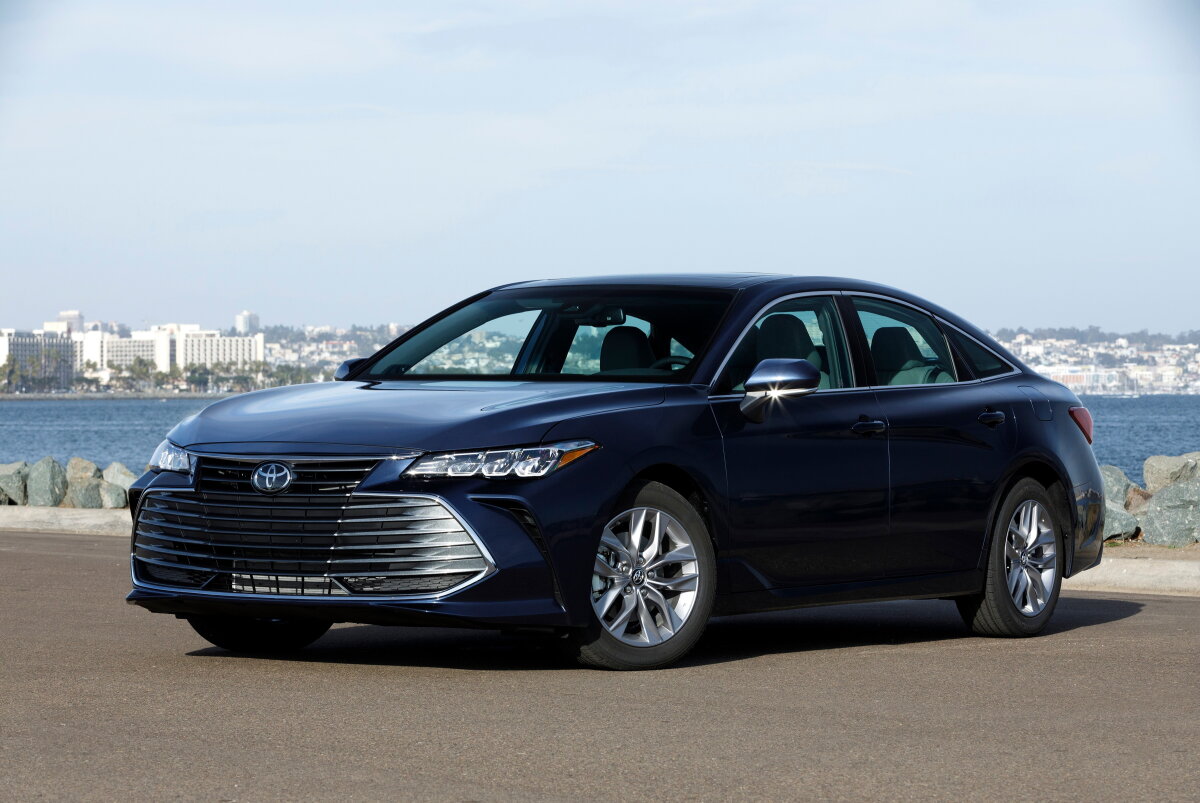
Every Toyota Avalon built for the U.S. market carries a 17-character VIN that identifies its plant, engine, model year, and generation — and Toyota stopped building the Avalon after the 2022 model year, so every one on the road today is a used car. That makes the VIN the fastest way to confirm what you're actually looking at before you buy, sell, or service one.
This guide breaks the Avalon's VIN down position by position, gives you a full model-year lookup chart, and shows you how to run a free, authoritative decode in under a minute.
Key Takeaways
- A Toyota Avalon VIN splits into three blocks: World Manufacturer Identifier (positions 1–3), Vehicle Descriptor Section (4–8), and Vehicle Identifier Section (9–17).
- Nearly every U.S.-market Avalon starts with 4T1, meaning it was built at Toyota Motor Manufacturing, Kentucky (TMMK) in Georgetown.
- Position 10 tells you the model year using a standardized letter/number code — S for 1995 through N for 2022.
- Carfax estimates 2.45 million vehicles on U.S. roads have a rolled-back odometer, so a VIN-based history check is worth running before you buy a used Avalon.
- Toyota's own VIN coding charts, filed with NHTSA, confirm exactly what each Avalon VIN position encodes — this article cites that primary source directly.
What a VIN Actually Encodes (and Why It's Worth Decoding)
A VIN is a 17-character code standardized under ISO 3779, and every character has a defined job: it names the country and plant where the car was built, the model and body style, the model year, and a unique production sequence number for that vehicle. No two Avalons built in the same plant in the same model year share a VIN.
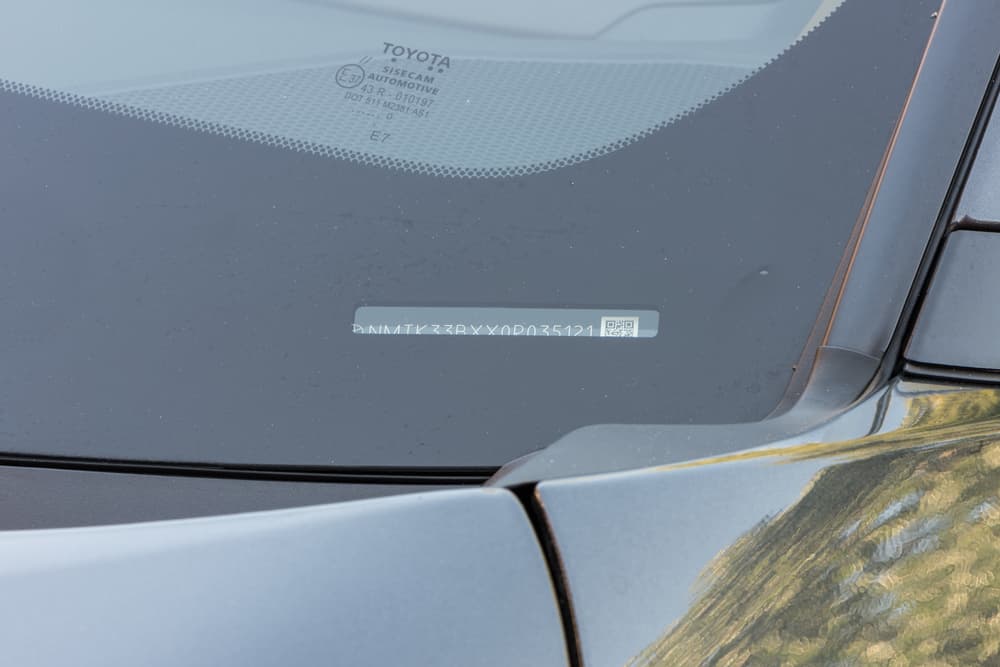
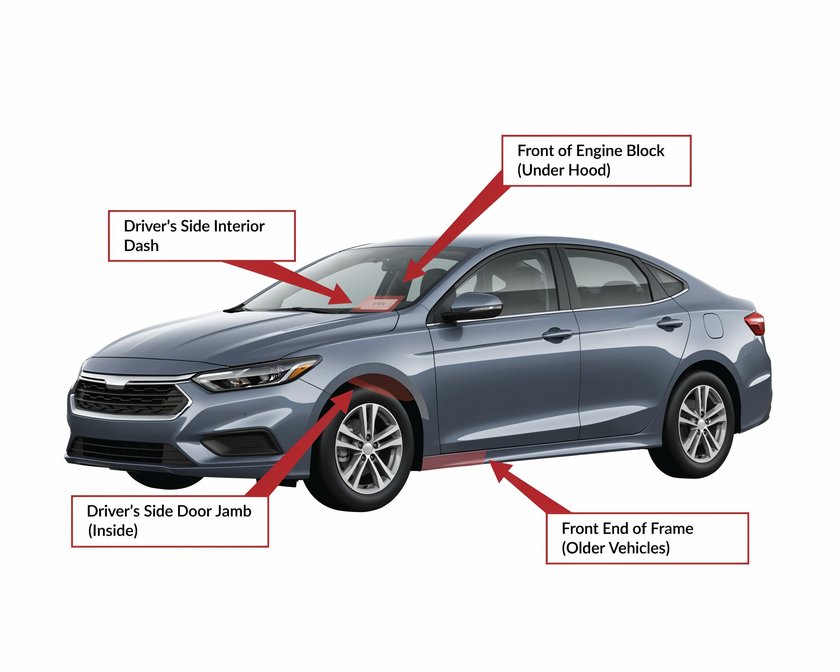
For an Avalon specifically, decoding the VIN answers three practical questions before you commit to a purchase: which of the five generations you're looking at, whether the trim and engine match what the seller is advertising, and whether that specific VIN has an open safety recall. You can find the VIN on the driver's side dashboard (visible through the windshield), on a sticker inside the driver's door jamb, or printed on the title and insurance card.
Why this matters more for a discontinued model: With no new Avalons being built, every transaction from here forward is a used-car transaction. A Carfax analysis found an "alarming spike" in odometer tampering in 2025, estimating roughly 2.45 million vehicles on U.S. roads have a rolled-back odometer — a 14% jump from 2024 — and pegged the average buyer loss at $3,300 in value once the fraud is discovered (Carfax, December 2025). NHTSA separately estimates odometer fraud affects more than 450,000 vehicle sales a year and costs U.S. consumers over $1 billion annually. A VIN-based vehicle history check is one of the few tools that can catch a mileage discrepancy before you sign anything.
[INTERNAL-LINK: how to read a full vehicle history report — ChassisVIN guide to interpreting a vehicle history report]
Toyota Avalon VIN Structure, Position by Position
A Toyota Avalon VIN breaks into three sections: the World Manufacturer Identifier (WMI) at positions 1–3, the Vehicle Descriptor Section (VDS) at positions 4–8, and the Vehicle Identifier Section (VIS) at positions 9–17. Toyota's own VIN coding documentation, filed with NHTSA for the fifth-generation Avalon, confirms exactly what each position encodes (Toyota VIN Coding System, filed with NHTSA vPIC):
| Position | Encodes | Toyota Avalon detail |
|---|---|---|
| 1 | Country of manufacture | 4 = United States |
| 2–3 | Manufacturer (WMI) | T1 — full WMI 4T1 = Toyota Motor Manufacturing, Kentucky |
| 4 | Body type | Toyota-specific code; commonly the letter tied to "4-door sedan" |
| 5 | Engine type | Letter code, e.g. Z = 2GR-FKS 3.5L V6 (301 hp) on 2019–2022 models |
| 6 | Restraint system | Airbag and seatbelt configuration |
| 7 | Series (trim/grade) | Letter code for Touring, XLE, XSE, Limited, and their HV/AWD/TRD variants |
| 8 | Line & Make | B = Avalon or Avalon Hybrid |
| 9 | Check digit | A calculated digit (0–9 or X) that validates the other 16 characters |
| 10 | Model year | Letter or number — see the full chart below |
| 11 | Plant of manufacture | U = Georgetown, Kentucky (TMMK) |
| 12–17 | Serial number | Sequential production number, unique per plant/year |
The check digit at position 9 is calculated from a weighted formula across the other 16 characters. You don't need to compute it by hand — NHTSA's free decoder validates it automatically and flags a VIN as unreadable if the math doesn't check out, which is a fast way to catch a typo or a deliberately altered VIN.
Toyota does not publish a public, official table mapping every VDS letter to a specific trim for every model year, so most third-party decoders (including this guide) reconstruct positions 4–8 from real decoded examples and Toyota's own filed documentation where it's available. For a guaranteed-accurate read on a specific VIN, run it through NHTSA's vPIC database directly.
[INTERNAL-LINK: decode any Toyota VIN — ChassisVIN's Toyota VIN decoder hub]
Decode the Model Year From Position 10
Position 10 uses a standardized letter/number cycle shared across every manufacturer, skipping the letters I, O, and Q so they're never confused with 1 and 0. Because the Avalon was sold in the U.S. for exactly one 30-year cycle (1995–2022), there's no ambiguity in the table below — each code below maps to exactly one Avalon model year.
| Position 10 code | Model year | Position 10 code | Model year |
|---|---|---|---|
| S | 1995 | A | 2010 |
| T | 1996 | B | 2011 |
| V | 1997 | C | 2012 |
| W | 1998 | D | 2013 |
| X | 1999 | E | 2014 |
| Y | 2000 | F | 2015 |
| 1 | 2001 | G | 2016 |
| 2 | 2002 | H | 2017 |
| 3 | 2003 | J | 2018 |
| 4 | 2004 | K | 2019 |
| 5 | 2005 | L | 2020 |
| 6 | 2006 | M | 2021 |
| 7 | 2007 | N | 2022 |
| 8 | 2008 | ||
| 9 | 2009 |
Avalon Generations and What the VIN Reveals About Each
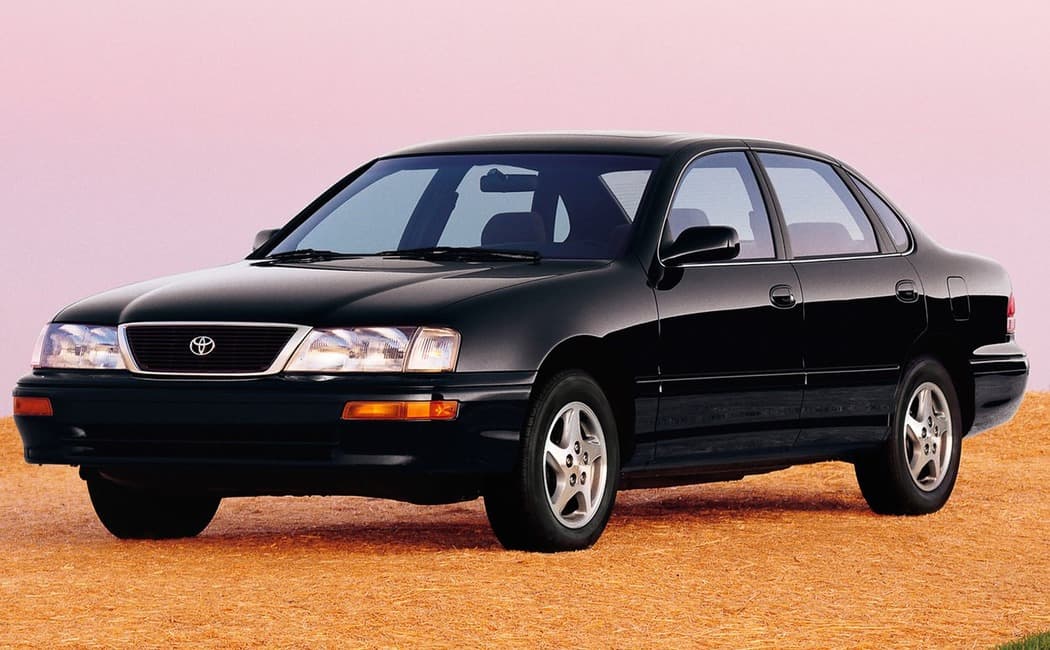
The Avalon ran through five generations at TMMK before Toyota discontinued it after the 2022 model year, ending a 27-year U.S. production run (Automotive News, via TFLcar). Knowing which generation a VIN's model year falls into tells you the platform, the available engines, and roughly which trim and equipment era you're dealing with.
| Generation | Model years | Chassis/model code | Engine(s) |
|---|---|---|---|
| 1st | 1995–1999 | MCX10 | 3.0L V6 (1MZ-FE) |
| 2nd | 2000–2004 | MCX20 | 3.0L V6 (1MZ-FE) |
| 3rd | 2005–2012 | GSX30 | 3.5L V6 (2GR-FE) |
| 4th | 2013–2018 | GSX40 (gas) / AVX40 (hybrid) | 3.5L V6 (2GR-FE) or 2.5L hybrid I4 (2AR-FXE) |
| 5th | 2019–2022 | GSX50 (gas) / AXXH50 (hybrid) | 3.5L V6, 2GR-FKS, 301 hp / 2.5L hybrid I4, A25A-FXS |
Toyota's fifth-generation VIN coding chart also lists the position-7 trim letters directly, which most consumer decoder sites don't have — worth flagging if you're trying to match a listed trim against a VIN: A = XSE + TRD Package, C = Touring, D = XLE, E = Limited, F = XLE + De-content package variants, with separate hybrid-specific (HV) codes for Limited HV and XSE HV grades (Toyota VIN Coding System, filed with NHTSA vPIC).
Avalon sales peaked at just over 100,000 units in calendar year 2000 and had fallen to roughly 10,000 units sold in the first half of 2021 alone, part of why Toyota pulled the model from the U.S. lineup after 2022 (Automotive News, via The Drive).
[INTERNAL-LINK: Toyota Avalon generation buyer's guide — ChassisVIN Avalon model hub page]
How to Decode Your Avalon's VIN for Free
You don't need to pay for a basic decode. NHTSA's vPIC database is the same source manufacturers submit data to, and it's free with no account required.
- Locate the 17-character VIN. Check the dashboard through the windshield, the driver's door jamb sticker, the title, or the insurance card. Confirm it's exactly 17 characters with no I, O, or Q.
- Go to NHTSA's vPIC VIN decoder and enter the VIN. The tool validates the check digit before returning results.
- Review the decoded fields — make, model, model year, plant, body class, engine, and fuel type all come back directly from the manufacturer-submitted data.
- Cross-check the results against the listing. If the seller says "2016 XLE" but the VIN decodes to a 2014 base trim, that's a conversation worth having before you go further.
- Run a recall check on the same VIN, covered next, since decoding and recall status are two separate lookups.
[INTERNAL-LINK: run a full Avalon VIN check — ChassisVIN's free Avalon VIN decoder tool]
Decode your Avalon's VIN free, right now. Paste any 17-character Avalon VIN into ChassisVIN's decoder to get the generation, plant, engine, and open recalls in one lookup — no account required.
Common Recalls You Can Check With the VIN
A VIN decode tells you what the car is; a recall check tells you whether that specific car has an outstanding safety fix. Several Avalon model years have been subject to significant recalls:
- 2003–2004 Avalon (119,000 units): Air bag control module circuits could be damaged by electrical interference, risking inadvertent air bag deployment or unexpected seatbelt pre-tensioner activation (AP, via Manufacturing.net).
- 2007–2010 Avalon and Camry: Part of Toyota's floor-mat-related unintended acceleration recalls, where a misplaced or incompatible floor mat could trap the accelerator pedal.
- 2012 Avalon (approximately 19,400 units): A supplier manufacturing error meant some vehicles received a front seatbelt buckle that couldn't correctly signal whether the belt was fastened, affecting airbag deployment logic (Toyota Motor North America, via Automotive World).
- 2012–2018 Avalon: Included in the industry-wide Takata airbag inflator recalls, where prolonged exposure to heat and humidity could cause the front passenger inflator to rupture (891 MAXFM).
Recall eligibility is tied to the specific VIN, not just the model year, since not every vehicle in an affected year range received the defective part. Check status directly at NHTSA's VIN recall lookup or through Toyota's own recall site before assuming a car is (or isn't) affected.
Conclusion
A Toyota Avalon VIN packs in the country of origin, the Georgetown, Kentucky plant, the generation and engine, and a unique serial number — all readable in about a minute with a free tool. Since production ended after 2022, every Avalon transaction from here on is a used-car transaction, which makes that minute worth spending: it confirms the seller's description matches the actual vehicle and flags any open recall before you take on someone else's unresolved safety issue.
[INTERNAL-LINK: check another Toyota model's VIN — ChassisVIN's Toyota VIN decoder directory]
Pull the real history behind any car — recalls, title brands, odometer trail.
Frequently Asked Questions
It's stamped on a plate visible through the base of the windshield on the driver's side, and printed on a sticker inside the driver's door jamb. You'll also find it on the title, registration, and insurance card.
4T1 is the World Manufacturer Identifier for a Toyota passenger car built at Toyota Motor Manufacturing, Kentucky, in Georgetown — where every U.S.-market Avalon has been assembled since 1994.
Decode position 10 for the model year using the chart above, then match that year to the generation table: 1995–1999 is first-generation, 2000–2004 second, 2005–2012 third, 2013–2018 fourth, and 2019–2022 fifth.
Enter the full 17-character VIN into NHTSA's VIN recall lookup tool or Toyota's own recall site. Recall status is tied to the individual VIN, so two Avalons from the same model year can have different recall statuses depending on production date and prior repairs. [INTERNAL-LINK: what a clean vehicle history report should include — ChassisVIN guide to reading a vehicle history report]
A free decoder like NHTSA's vPIC accurately returns manufacturer-submitted specs — year, plant, engine, body style — straight from the source. It won't show you accident history, title brands, or ownership records, which is where a paid vehicle history report adds value on top of the decode.
Related Guides

Where Are Toyota Tundras Made? Tundra Manufacturing Locations | Toyota Vin Decoder
Find out where Toyota Tundras are made. Learn about the Tundra's manufacturing plants, production history, and its American-made roots. Get your VIN report now!
What Does LE Stand For Toyota? Trim Level Guide & VIN Decoder
Uncover the meaning of Toyota LE trim levels. Discover features, compare trims, and decode your VIN. Learn about SE, XLE, and more. Get the details here!

Toyota Transmission Fluid Change: Timing, Cost & Instructions
Need to change your Toyota transmission fluid? Find out how often, what it costs, and how to do it. Get the best advice and keep your Toyota running smoothly.
Grinding Noise When Accelerating: Causes & Solutions | Toyota VIN Decoder
Experiencing a grinding noise when accelerating? This guide explains common causes like wheel bearings, brakes, and more. Get expert advice and solutions for your car.
Bank 1 Sensor 2 Upstream or Downstream? Location & Function
Demystifying Bank 1 Sensor 2. Is it upstream or downstream? Find out the exact location, what it does, and how to troubleshoot problems. Get insights and resources for your Toyota at ToyotaVinDecoder.com.

Modded Toyota Camry: Customization, Mods, and Styling Guide
Discover the best modded Toyota Camry ideas! Learn about performance upgrades, styling, and customization. Find inspiration for your own Camry mods.